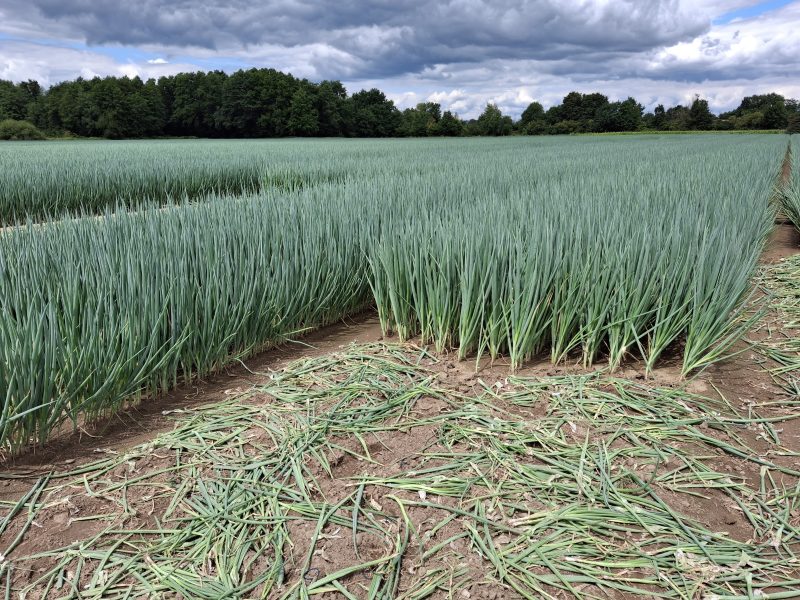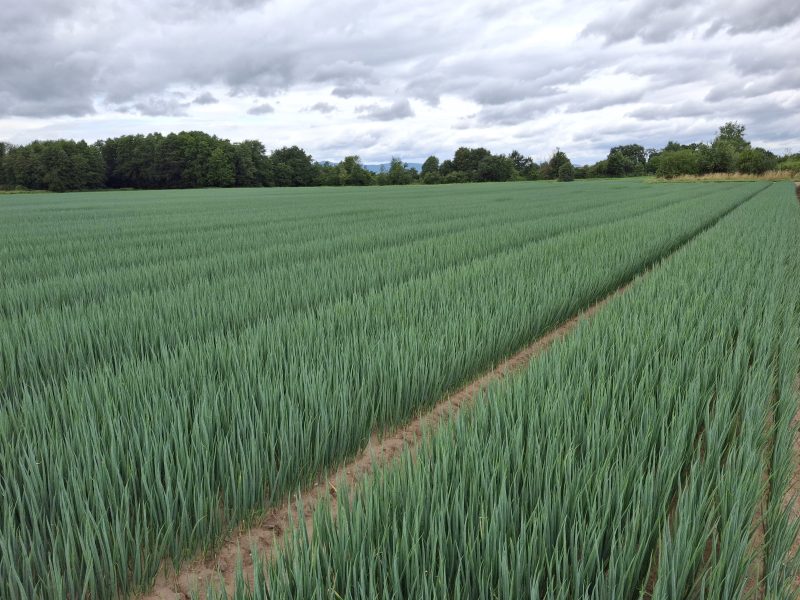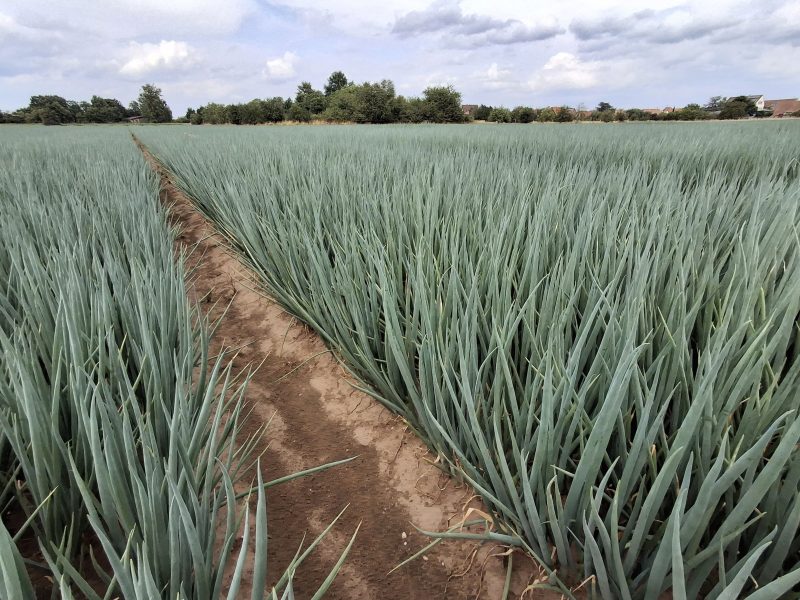
A large-scale operation focused on fresh supply
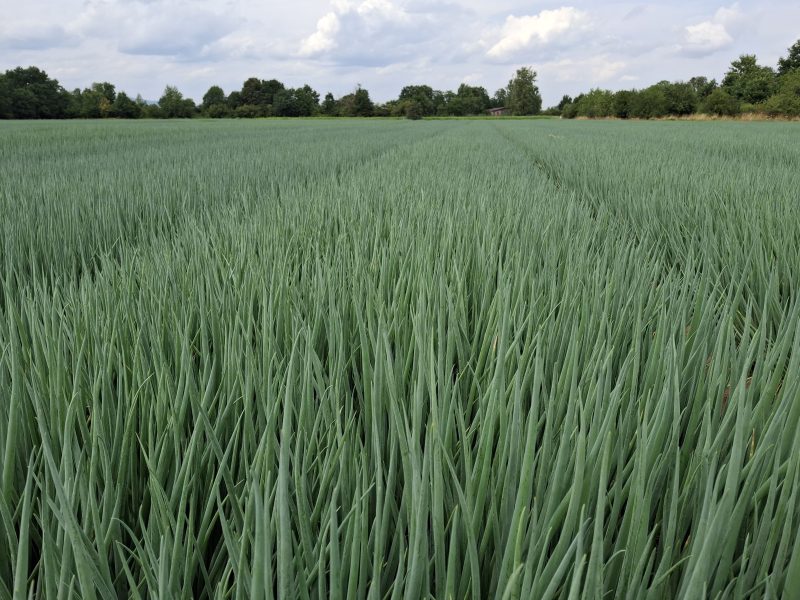
“Our goal is to supply fresh bunching onions every day,” Matthias explains. His farm supplies major retail customers in Germany, the United Kingdom, Poland and France, where freshness and consistent quality are essential.
Besides bunching onions, the farm grows a wide range of vegetable crops, including daikon, radish, Chinese cabbage, pak choi, celery, parsley, dill, peas and bulb onions. Adapting production throughout the season. Growing conditions in the Pfalz region offer opportunities for both very early and very late production. Winters are relatively mild, although frost still occurs, making irrigation essential during dry periods. To guarantee a continuous supply throughout the year, production planning requires frequent variety changes. “We switch varieties regularly to ensure our customers receive a continuous supply throughout the season.”
The farm relies on different Allium types depending on the season. Winter production is mainly based on Allium cepa, while summer production primarily uses Allium fistulosum. Hybrid varieties currently account for only a small share of production.
The biggest challenges facing growers
Like many professional growers, Matthias sees increasing pressure from both production costs and crop protection restrictions. “The number of available crop protection products continues to decrease, while supermarkets are becoming increasingly strict on residue limits,” he says.
Weather also plays a major role. Dry conditions can largely be managed through irrigation, but prolonged rainfall remains much more difficult to control. Disease pressure is another growing concern. “Thrips and downy mildew are currently our biggest challenges.”
Labour remains an important issue as well. Finding sufficient seasonal workers has become more difficult, while recruiting skilled specialists is increasingly challenging and costly.
Quality starts with the right variety
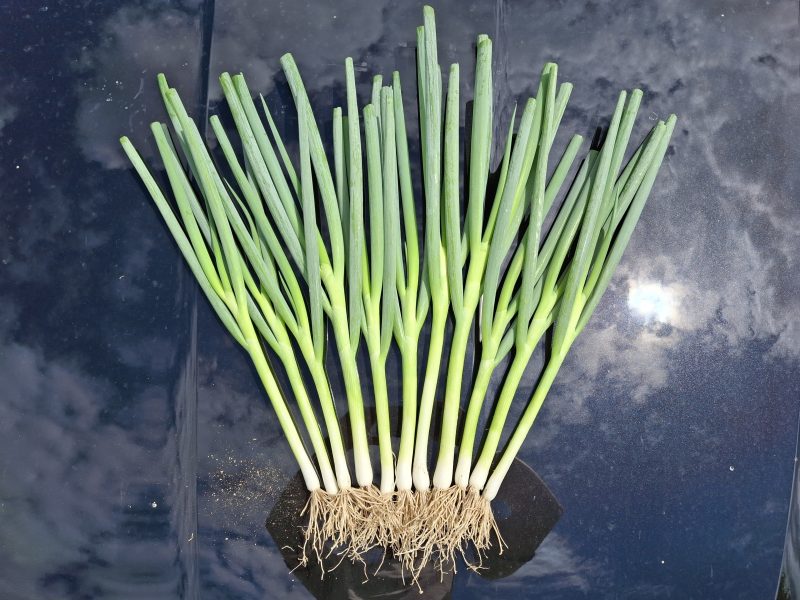
Retail customers demand bunching onions with only a small white shaft and healthy, dark green foliage. Maintaining uniform quality depends on both cultivation techniques and selecting the right varieties. When choosing new varieties, one characteristic stands out above all others. “Good cleanability is the most important trait because it directly reduces harvesting and labour costs.”
Disease tolerance follows closely behind, particularly as disease pressure continues to increase.
Matching varieties to seasonal conditions
Matthias grows primarily Takii varieties, each selected for its specific strengths during the production season.
- Kishi F1 for its speed in spring.
- Kyosen F1 for excellent cleanability.
- Baton F1 for strong summer foliage.
- Estafette F1 for its tolerance to downy mildew.
- Etappe F1 for reliable autumn production.
Although field uniformity is appreciated, Matthias considers disease tolerance and cleanability far more important for efficient commercial production. Strong root systems also contribute to better crop performance during periods of high temperatures, although they require more effort during harvesting.
Looking ahead
After a period in which retailers increasingly sourced bunching onions from other regions, Matthias sees renewed opportunities for local production in Germany.
“Retailers have realised that not every crop can be grown successfully everywhere. As a result, bunching onion production in the Pfalz region is growing again.”
Looking towards the future, his breeding priorities are clear.

Supporting growers through breeding
As production conditions become increasingly challenging, breeders and growers need to work closely together. Characteristics such as disease tolerance, cleanability, reliability and adaptability are becoming more important than ever.
By working alongside professional growers like Matthias Nied, Takii continues to develop varieties that help growers produce high-quality bunching onions efficiently and consistently throughout the season.